Geography, topography, ecology & key landmarks:
• Size: 825,615 km2 (318,772 sq mi) 34th largest country in the world.
• Bordered by the Atlantic Ocean to the west, and shares land borders with Zambia and Angola to the north, Botswana to the east and South Africa to the south and east.
• Driest country in sub-Saharan Africa, situated between the large, arid Namib and Kalahari deserts.
• The Namib desert is the oldest desert in the world and contains some of the highest sand dunes anywhere on earth. Iconic Sossusvlei is in the Namib desert.
• The largest canyon in Africa, the Fish River Canyon, is located in the south of the country.
• Highest point: Königstein in the Brandberg at 2,606 metres (8,550 ft) above sea level.
• Climate is generally arid, with more than 300 sunshine days per year. Average rainfall varies from almost zero in the coastal desert to more than 600 mm (24 in) in the Caprivi Strip.
Geographical regions:
• The Central Plateau running from north to south (that contains dramatic Damaraland),
• the Namib (including the Skeleton Coast and the Kaokoveld in the north and the Namib Sand Sea along the central coast),
• the Great Escarpment,
• the Bushveld in the northeast in the Caprivi Strip,
• and the Kalahari Desert that also extends into South Africa and Botswana.
UNESCO World Heritage Sites:
Two (2) namely Twyfelfontein or /Ui-//aes (2007) and Namib Sand Sea (2013)
Famous parks and reserves:
• Etosha National Park– more than 110 mammal species and 350 bird species in a dramatic setting; undoubtedly one of the greatest wildlife reserves on the planet
• Namib-Naukluft National Park– part of the Namib Sand Sea UNESCO World Heritage Site and home to iconic Sossusvlei and much more
• Daan Viljoen Game Reserve– combining great wildlife viewing and leisure activities a mere 25 km from Windhoek
• Bwabwata National Park– a “people’s park” forming a crucial wildlife corridor and blessed with stunning natural scenery and fantastic fauna and flora
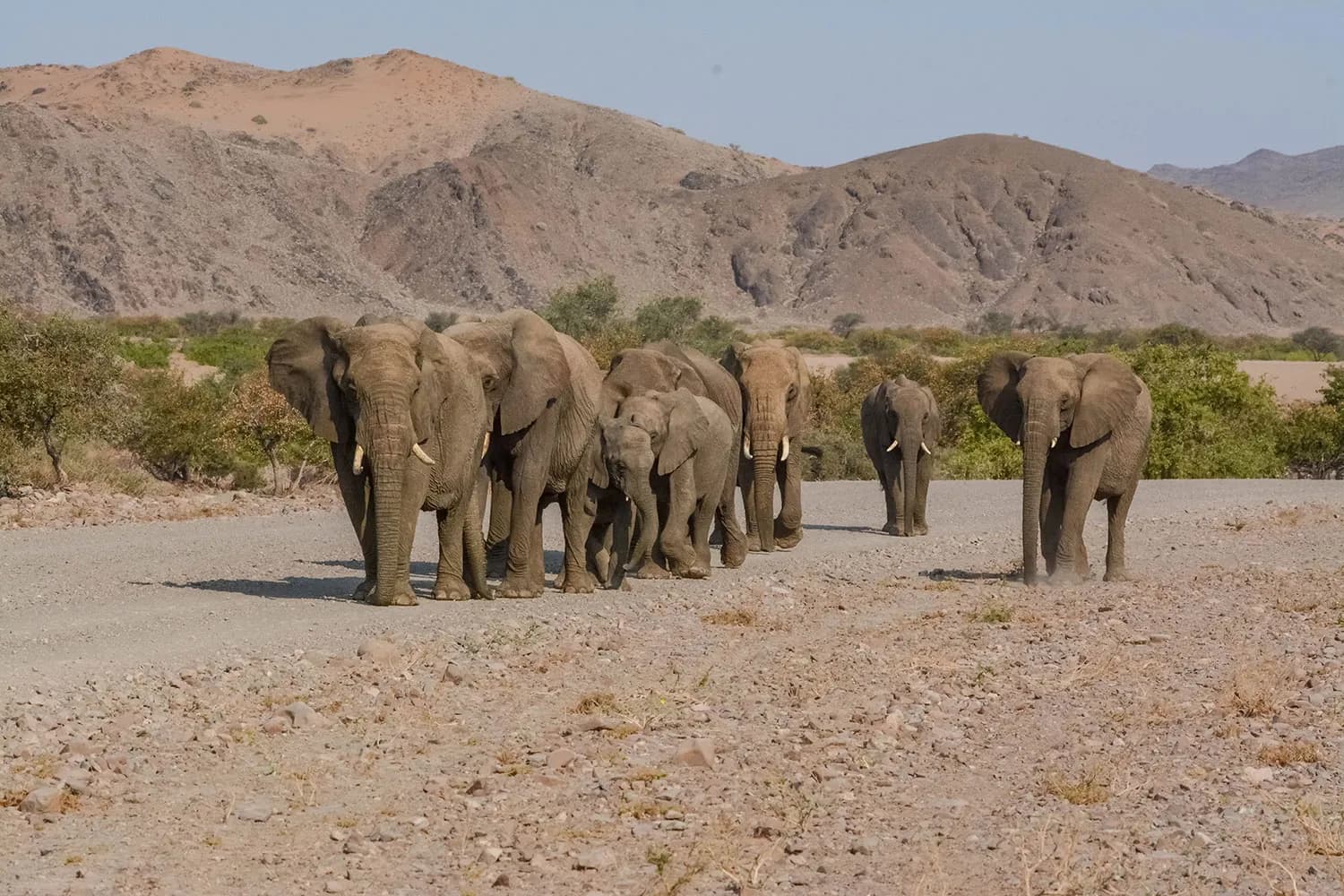
• Mudumu National Park– lush, green, wet park in the Caprivi Strip filled with mammals (lots of African Elephants!) and 430 bird species
Fauna:
• 230 mammal species, including Africa’s Big Five
• National Mammal: Gemsbok
• Other star mammals: African Wild Dog, Cheetah, Brown and Spotted Hyaena, Roan and Sable Antelope, Mountain Zebra, Topi (Tsessebe), Puku, Sitatunga, Kirk’s Dikdik, Dassie Rat, South African Fur Seal, Heaviside’s Dolphin and Namib Desert Horse
• 645 bird species, including 1 endemic (Dune Lark) and 33 globally threatened species
• National Bird: African Fish Eagle
• Other star birds: Kori Bustard, Secretarybird, Rüppell’s Korhaan, Rockrunner, Herero Chat, Damara Tern, Hartlaub’s Spurfowl, Carp’s Tit, Gray’s and Dune Lark, and Cinderella Waxbill
• IBAs (Important Bird Areas): 19, including Etosha National Park, Mile 4 Saltworks, Namib-Naukluft Park, Sandwich Harbour, Brandberg mountain and Waterberg Plateau Park.
• 250 species of reptiles, 59 of them endemic
• 115 species of fish, 5 of them endemic
• 50 species of frogs, 6 of them endemic
• 1,331 species of arachnids
Flora:
• 4,400 species of plants, including 683 endemics
• National Plant: Welwitschia
• National Tree: Quiver Tree
Article Rating