
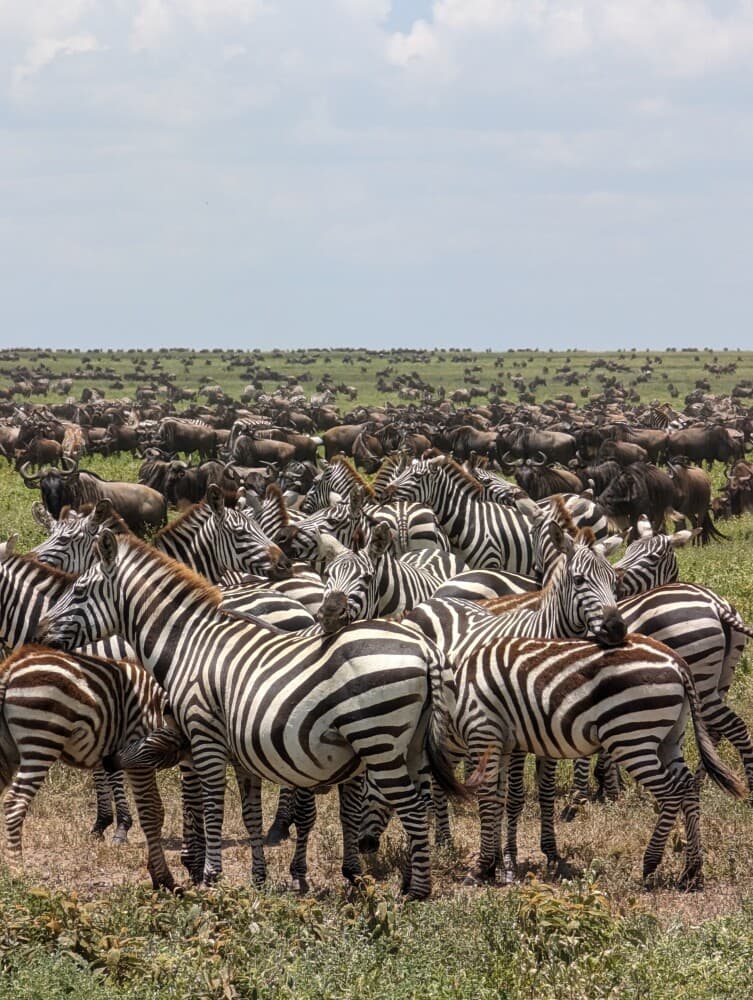


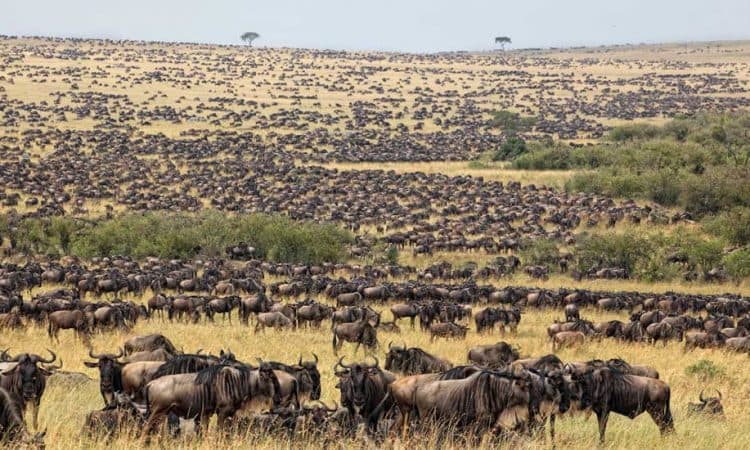


Every year, across the vast plains of Serengeti National Park and Maasai Mara National Reserve, one of the greatest wildlife spectacles on Earth unfolds—the Great Migration. This extraordinary movement of over two million wildebeest, accompanied by zebras and gazelles, is not just a journey; it is a dramatic story of survival, instinct, and the raw power of nature.
What is the Great Migration?
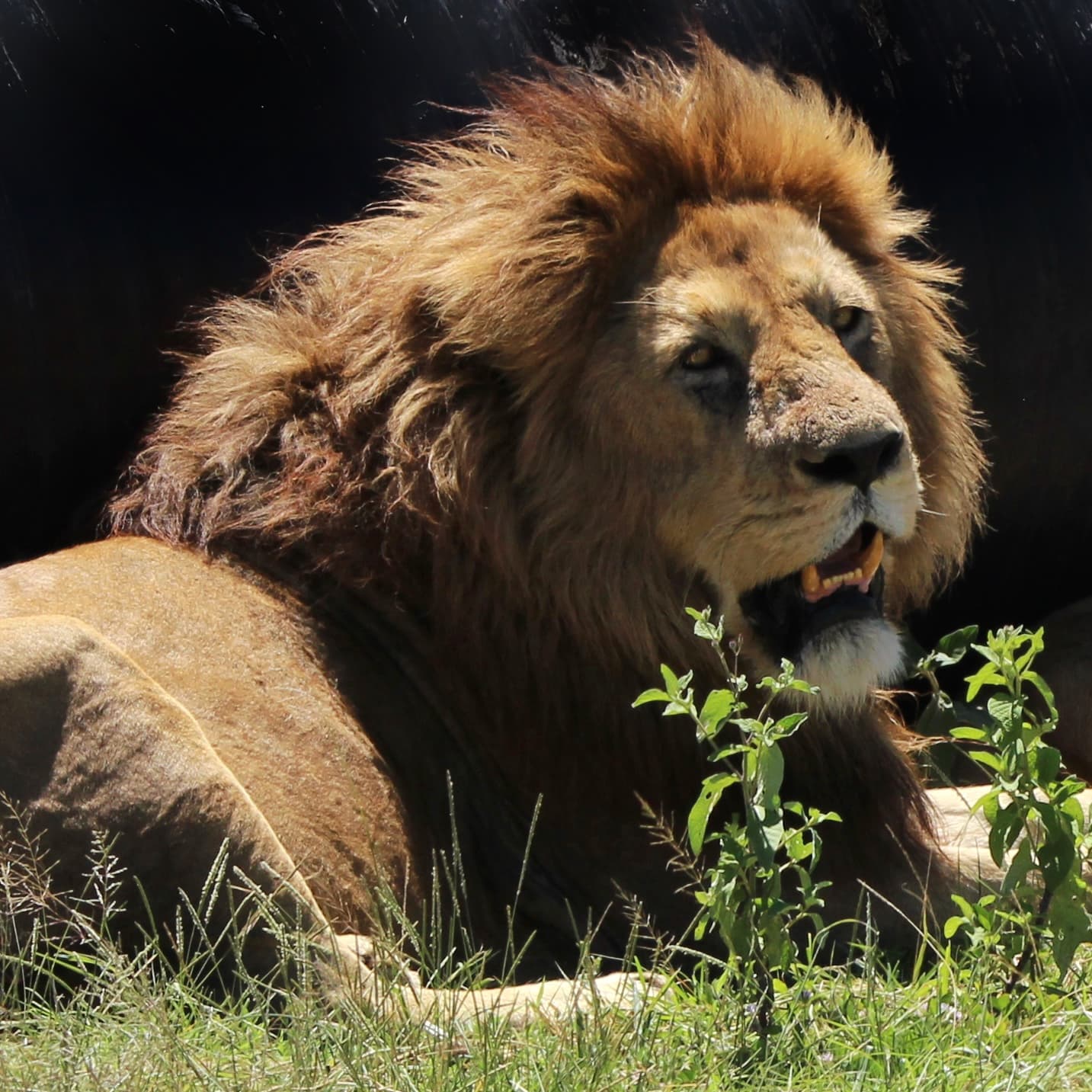
The Great Migration is a continuous, circular movement of animals in search of fresh grazing and water. Driven by seasonal rains, herds of wildebeest travel thousands of kilometers across the ecosystem, followed closely by predators such as lions, cheetahs, and crocodiles.
Unlike a single event, the migration happens year-round, with each phase offering a different kind of experience—from calving season to river crossings.
The Migration Cycle
December to March – Calving Season (Southern Serengeti)
In the nutrient-rich plains of southern Serengeti National Park, hundreds of thousands of calves are born within a short period. This is one of the most rewarding times to visit, as predator action is high and the landscape is lush and green.
April to June – The Journey Begins
As the rains fade, the herds begin moving north and west. This is a quieter, more serene phase, with long columns of animals stretching across the horizon.
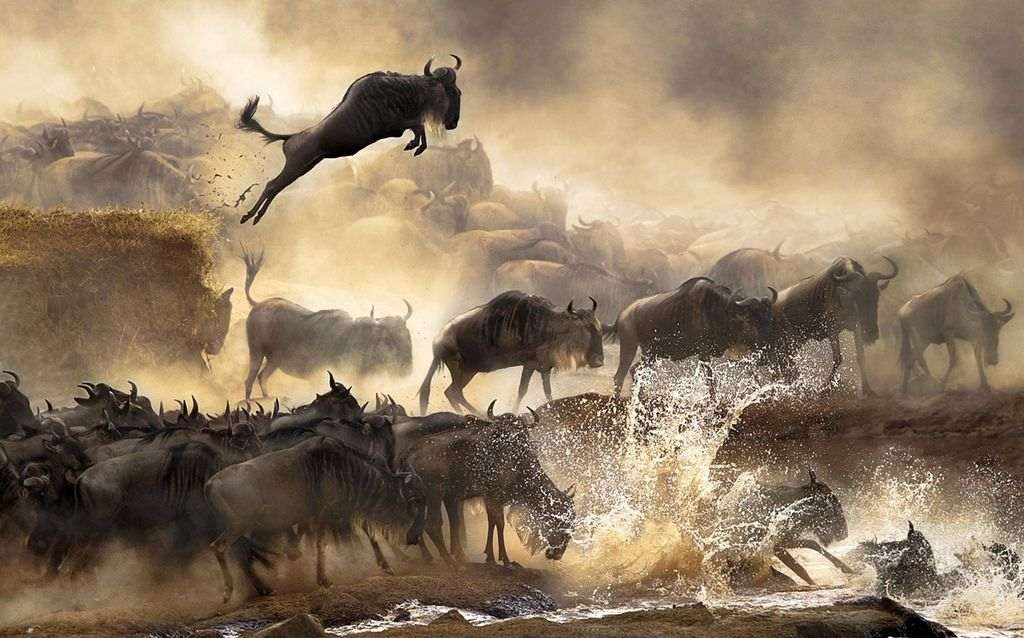
July to October – River Crossings (Northern Serengeti & Maasai Mara)
This is the most dramatic part of the migration. Herds must cross dangerous rivers like the Mara River, where strong currents and waiting crocodiles create intense scenes of survival. These crossings are unpredictable but unforgettable.
November – Return to the South
With the return of short rains, the herds gradually move back toward the southern plains, completing the cycle.
Why is the Great Migration So Special?
The Great Migration is often called the “World Cup of Wildlife” for a reason. It’s not just the sheer number of animals—it’s the interaction between species, the dramatic landscapes, and the unpredictability of nature.
You may witness:
A lion pride stalking its prey
Thousands of wildebeest moving in synchronized patterns
Heart-stopping river crossings
Vast, untouched African wilderness
Best Time to Visit
There is no single “best” time—it depends on what you want to see:
Calving & predator action: January – March
River crossings: July – October
Fewer crowds & scenic beauty: April – June
Tips for Experiencing the Migration
Plan early: Migration safaris are in high demand, especially during peak months
Choose the right location: Timing and positioning are key to seeing the action
Be patient: Wildlife is unpredictable, but the reward is worth it
Travel with experienced guides: Their knowledge makes all the difference
Final Thoughts
The Great Migration is more than a safari highlight—it’s a reminder of the delicate balance of nature and the enduring rhythms of the wild. Whether it’s your first safari or your tenth, witnessing this incredible journey leaves a lasting impression.
If you’re dreaming of experiencing the Great Migration, the plains of Serengeti National Park are waiting—alive with movement, drama, and unforgettable moments.
Article Rating